PDA Text only High contrast
Skip to main content
 

About Alexandrite Tsarstone Collectors Guide

"Our scientific power has outrun our spiritual power. We have guided missiles and misguided men." Martin Luther King Jr. (1929 - 1968), Strength to Love, 1963.
About Alexandrite gemstone buyer and collectors guide

Alexandrite Guide is a noncommercial website launched and sponsored by Multicolour Gems Ltd. The site was developed as a guide for people interested in learning more about the history, gemology, and valuation of alexandrite. With frequent inquiries about old and inherited alexandrites from Alexandria and other places, the Alexandrite Guide was written to address and clarify these and other questions about this rare and collectable gemstone. Alexandrite is not mined in Egypt nor is it found in the pyramids there. Synthetic color change corundum has been around since the early 1900's and that's what most of these large clean inherited stones are.

To make informed decisions about gemstones and their value, we need to know at least something about how the way they are evaluated. For an expensive stone like alexandrite, knowledge is essential to making the correct choice. Many jewelers are specialized in diamonds or gold but because of its rarity, it is not surprising that even gemologists are less familiar with alexandrite. The site is not a substitute for experience but it is an invaluable guide especially for beginners or first time buyers. Alexandrite is an expensive gemstone that interested buyers should know how to evaluate and appreciate before purchasing.

The goal of the Alexandrite Guide project is to establish a comprehensive resource, dedicated to alexandrite gemstone and to create an open community where the free exchange of information is encouraged and where all content is freely accessible on the web.

  • A guide to evaluating some common and important aspects of natural alexandrite;
  • An aid to avoiding fraud, with tips on detecting synthetic and imitation alexandrites;
  • A handy reference about alexandrite and its chemical and physical properties;
  • A collection of practical tips for selecting and evaluating an alexandrite;
  • A challenge to evaluate alexandrite in terms of its value based on color change, cut, size, color, and artistic appeal rather than only on its clarity and price.

This project includes a collection of articles about alexandrite, a directory of alexandrite localities with maps and an alexandrite gemstone database. All content is created and written collaboratively by contributors and volunteers and we encourage everyone with a passion for alexandrite to help us build a better resource by participating in discussions, submitting references and by listing your own alexandrite in our gemstones database.

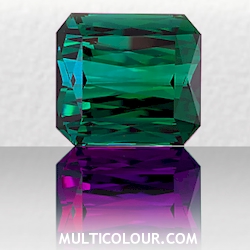
Please note, that alexandrite is especially difficult to photograph. Not only does the color change as a result of illumination under different kinds of light sources, but it also varies as a result of geographical location and time of day. Photographers can maximize the observable color change by obstructing any unintentional ambient light so that the resulting image is a function of a singular unmixed light source. Cool daylight tubes (around 6000K) for daylight colors and studio or photo flood lights (3300 -- 3500K) as an incandescent light source will always produce a good change. Natural daylight is more difficult to use unless the time of day is standardized and even then, the weather will still be a factor. Morning light will display the best greens and the stone will appear less green and more reddish in the late afternoon, especially in direct sunlight.

At present, the two primary community spaces where you can participate are the email list and the discussion forum. The future success of Alexandrite Tsarstone Collectors Guide relies on your participation.

Search
This page options
Relevant pages
Alexandrite guide
 
 
Sponsored by Multicolour Gems Ltd Design and maintenance by Netcomposite