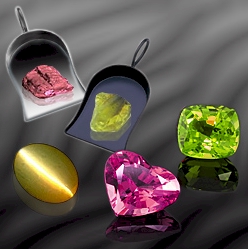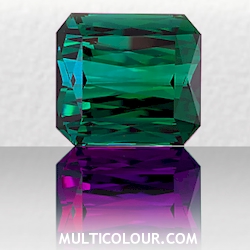
Chrysoberyl is the species name and Alexandrite is the variety name. Alexandrite is that variety of chrysoberyl that changes color as a function of the light source; green in daylight and red under incandescent light.
In practice, chrysoberyl and alexandrite may be difficult to differentiate. Since stones with a weak change may be called alexandrite and gemstones with a faint change are called chrysoberyl, what is the difference? Where is the borderline?
The mining of alexandrite in Russia lasted less than 100 years from the time it was discovered in 1833 to the early 1900’s. It was George Kunz, the gemologist/gemstone buyer for Tiffany & Co that probably did the most to popularize this unique gemst
Some modern synthetic gemstones look more natural and are more difficult to identify, but an experienced jeweler or gemologist can usually classify them
Russian Alexandrites is illustrated with more than 200 colour figures and photographs, addresses mineralogists, gemmologists, historians, mineral and gem collectors as well as all members of the gem trade.